What separates a good waterfront condo from a great one in the Palm Beaches? It often comes down to a thoughtful mix of amenities, resiliency, and governance you can trust. If you love the idea of sunrise over the Atlantic or a quick cruise on the Intracoastal, you also want confidence that the building is well run, insurable, and built for the coast. In this guide, you’ll learn which amenities matter, what to verify before you buy, and how to protect lifestyle and resale value in Palm Beach County’s most sought-after settings. Let’s dive in.
Choose your waterfront lifestyle
The Palm Beaches offer distinct waterfront settings. Each delivers a different daily rhythm and maintenance profile.
- Oceanfront high-rises: Immediate beach access and dramatic views. You should expect more wind exposure and salt corrosion, plus ongoing beach nourishment considerations.
- Intracoastal Waterway condos: Calmer waters and convenient boating. You will want to confirm bridge clearances and channel depth if you plan to dock a boat.
- Lake Worth Lagoon and back-bay: Protected water and wildlife views with easier paddle and small-vessel access.
- Canal-front communities: Private docks and lifts are common. Dredging and seawall conditions matter for long-term upkeep and safe navigation.
South Florida faces storms, storm surge, and tidal flooding. Review your FEMA flood zone and Base Flood Elevation early using the FEMA Flood Map Service Center, and explore regional sea-level context with the NOAA Sea Level Rise Viewer.
Waterfront amenities that matter most
Marina, boat slips, and lifts
If you plan to boat, the marina is often the heart of the property.
- Slip ownership: Deeded slips usually carry stronger resale value. Assigned or rented slips depend on association rules and waitlists.
- Technical checks: Verify slip length and width, water depth at low tide, bridge clearances, dredging schedules and costs, and electrical to the docks.
- Boat lifts and davits: Confirm capacity, maintenance responsibilities, and replacement policies.
Private beach access
Direct ocean access is a defining luxury. Ask about beach nourishment timing, public access easements, and any history of dune or sand loss that could lead to future costs.
Seawalls, docks, and guest docking
Seawalls and bulkheads protect your shoreline. Review ownership, recent repairs, and erosion history. For docks and piers, confirm permitting status, guest docking rules, and lighting or security standards that keep spaces safe and usable after dark.
On-water services
Fuel, pump-out, and mooring services increase convenience and marketability. If not on site, note proximity and ease of access by water.
Year-round outdoor living
Balconies and terraces should be designed for wind and salt conditions. Look for impact-rated doors and railings, non-slip materials, and shade elements that make spaces comfortable in all seasons.
Building amenities that elevate daily life
Wellness and social spaces
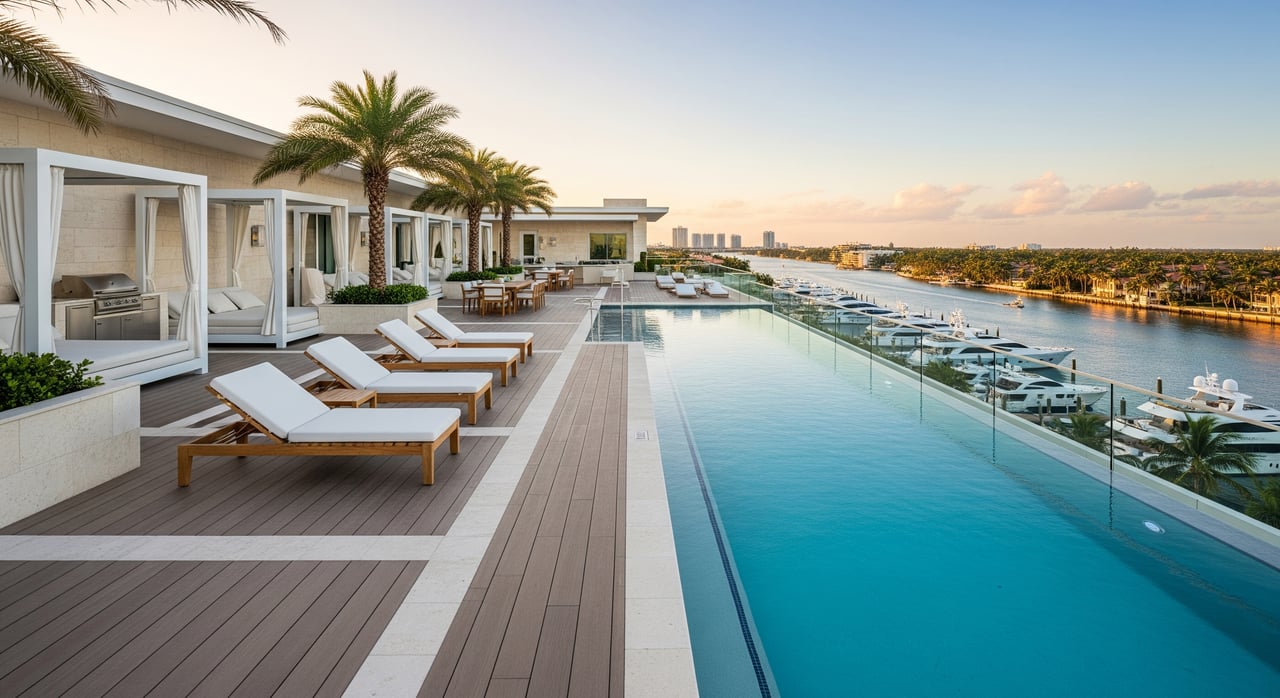
Heated pools and spa areas extend seasonal use. A fitness center with water views invites daily routines. Club rooms and lounges help you host without leaving the building.
Security, service, and staffing
Concierge and valet programs add welcome ease. Gated entries, CCTV, and on-site management improve peace of mind and response times for maintenance.
Parking, storage, and mobility
Look for covered or secured garage parking with storage lockers for beach and marine gear. Ample elevator capacity makes weekends flow smoothly, especially in taller buildings.
Pets and EV readiness
Dog-walk areas and pet wash stations are increasingly common. EV charging is no longer niche. Confirm availability, fees, and whether charging can be added near your space.
Resiliency and safety essentials
Storm and flood readiness
Most waterfront buildings sit in higher-risk flood zones. Review the building’s flood zone and elevation using the FEMA Flood Map Service Center. Ask how storm surge could affect ground-level parking, elevators, and storage. Explore longer-term context with NOAA’s Sea Level Rise Viewer.
Building envelope and wind protection
Impact-rated windows and doors, a maintained roof system, and documented exterior restoration signal a building that respects the coast. A wind mitigation inspection can help quantify protection and potential insurance credits.
Backup power and critical systems
Backup generation should support elevators, pumps, and essential lighting. Ask how long systems can run and whether fuel storage is on site or contracted.
Parking that stays usable
If garage floors are vulnerable to flooding, you may face access issues after a storm. Elevated parking or protective pump systems can make a meaningful difference.
Financial due diligence you should not skip
HOA fees and reserve funding
Waterfront associations often carry higher costs for seawalls, docks, exterior coatings, and insurance. Request the full financial picture:
- Current budget and 12–24 months of financials
- Reserve study and current reserve balance
- Recent board minutes that note upcoming projects or special assessments
- Master insurance certificates
- Declaration, bylaws, and rules
Given the cost of seawalls, balconies, roofing, and marina systems, confirm that reserves align with realistic replacement timelines.
Insurance layers and volatility
You will typically rely on two layers:
- Association master policy: Covers the structure and common elements. Coverage type varies by building.
- Unit policy: HO-6 or similar for interior finishes, contents, and loss assessment.
Flood coverage is often essential at the unit level even if the association maintains a master flood policy. Learn more about program basics through FEMA’s page on flood insurance. Florida windstorm coverage and named-storm deductibles also matter. The Florida Office of Insurance Regulation is a helpful reference for statewide insurance conditions.
Confirm deductible structures and any history of assessments tied to prior claims. Ask management about premium trends and whether the association relies on the state’s insurer of last resort in tight markets.
Taxes, assessments, and operating costs
Premium views often carry premium assessed values. Review tax history, recent assessments, and planned capital projects like seawall work or dredging. In coastal buildings, salt-driven maintenance can increase HVAC and exterior coating costs.
Inspections tailored to waterfront properties
Waterfront living calls for a deeper inspection bench. In addition to a standard home inspection, consider:
- Marine and marina survey: Evaluate pilings, docks, electrical, and water depth.
- Seawall specialist review: Identify bowing, scour, and anchoring issues.
- Structural engineer assessment: If disclosures or visible issues suggest concerns.
- Building envelope and moisture inspection: Catch water intrusion early.
- Wind mitigation report: Document openings protection and roof system.
- Pest inspection: Marine environments can increase risk for wood-destroying organisms.
Governance, rental rules, and lifestyle fit
Florida condominium governance is set by the state’s legal framework. You can review the statute that shapes disclosures, budgets, and operations in Florida Statutes Chapter 718. Association rules vary by building, so confirm:
- Rental policies: Minimum lease terms, caps, and short-term rules
- Pet policies: Size or number limits and fees
- Use rules: Dock usage, barbeques, balcony modifications, and impact window requirements
- Parking: Deeded vs. assigned spaces, guest parking, and EV charging protocols
Municipal rules can add layers, especially for short-term rentals. Check the specific city where you plan to buy.
Permitting and waterway stewardship
Waterfront improvements often require permits. The Florida Department of Environmental Protection and the [U.S. Army Corps of Engineers] frequently oversee coastal work, while the South Florida Water Management District plays a key role in regional water management. Ask how the association manages dredging, seawall repairs, and shoreline projects, and whether future work is funded.
Resale value signals in the Palm Beaches
Strong resale stories share common threads:
- Deeded water access or beach access
- Unobstructed ocean or Intracoastal views
- Updated exterior and common areas with documented repairs
- Impact-rated openings and a proven building envelope
- Balanced HOA fees with healthy reserves
- Clear rental policies that match your ownership plan
- Convenient proximity to marinas, dining, culture, and daily needs
- Insurance that remains obtainable and sensibly priced for the market
Your smart-buyer checklist
Use this quick list as you shortlist buildings and units:
- Get the complete condo packet: declaration, bylaws, budget, reserve study, insurance certificates, recent board minutes, and disclosures on litigation.
- Confirm slip status: deeded, assigned, or waitlist. Verify dimensions, depth, and bridges.
- Check flood data: FEMA flood zone, Base Flood Elevation, and any elevation certificate.
- Review assessment history and capital plan for the next 5 years.
- Request insurance details: master policy coverages and deductibles. Price unit-level HO-6, wind, and flood before you make an offer.
- Schedule specialized inspections: marine, seawall, structural if indicated, envelope, wind mitigation, and standard home inspection.
- Verify rental, pet, and use policies fit your plans.
- Confirm parking assignments, guest parking, storage, and EV options.
- Ask about generator capacity and flood protections for elevators, pumps, and garage areas.
How Haven Palm Beach can help
When you shop the coast, you deserve guidance that blends lifestyle insight with precise specification. Our focus on architecturally distinct waterfront lofts and penthouses means we prioritize the amenities, materials, and governance structures that protect your time and your asset. If you would like a curated shortlist matched to your boating needs, views, and must-have services, we can help you evaluate each building’s amenity stack and financial health with clarity and discretion.
Ready to experience the Palm Beaches through a more refined lens? Request a VIP Tour through Haven Palm Beach and explore a selection of waterfront sanctuaries on your terms.
FAQs
Do Palm Beaches waterfront condos require flood insurance?
- Most waterfront buildings are in higher-risk flood zones, so flood coverage is often essential. Review the building’s flood zone in the FEMA Flood Map Service Center and confirm whether you also need unit-level contents and interior coverage.
Which amenities have the biggest impact on resale value?
- Deeded slips or beach access, unobstructed water views, impact-rated openings, updated common areas, balanced HOA fees with solid reserves, and convenient access to marinas and culture typically support demand.
How can I evaluate seawall and dock condition before I buy?
- Hire a marine or seawall specialist to inspect for bowing, scour, and anchoring issues, and a marina surveyor to assess pilings, electrical, and depth. Ask for repair history and financing plans for future work.
What should I know about condo rules and rentals in Florida?
- Policies vary by building, guided by Florida Statutes Chapter 718. Confirm minimum lease terms, any rental caps, pet rules, and use restrictions before you commit.
Why are HOA fees higher on the water?
- Waterfront associations often budget for seawall and marina maintenance, more frequent exterior coatings due to salt, and higher insurance premiums. Always review the budget, reserve study, and board minutes for upcoming projects.