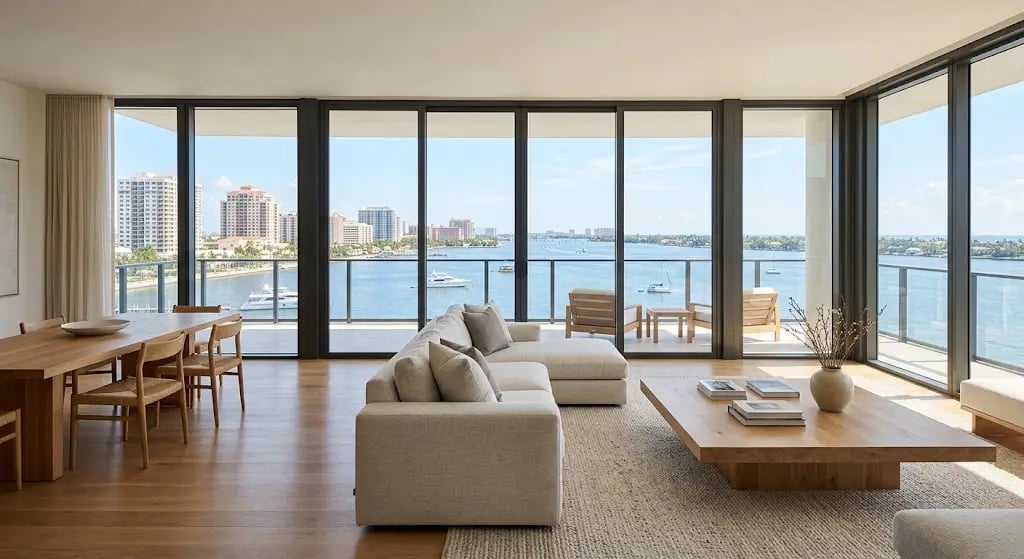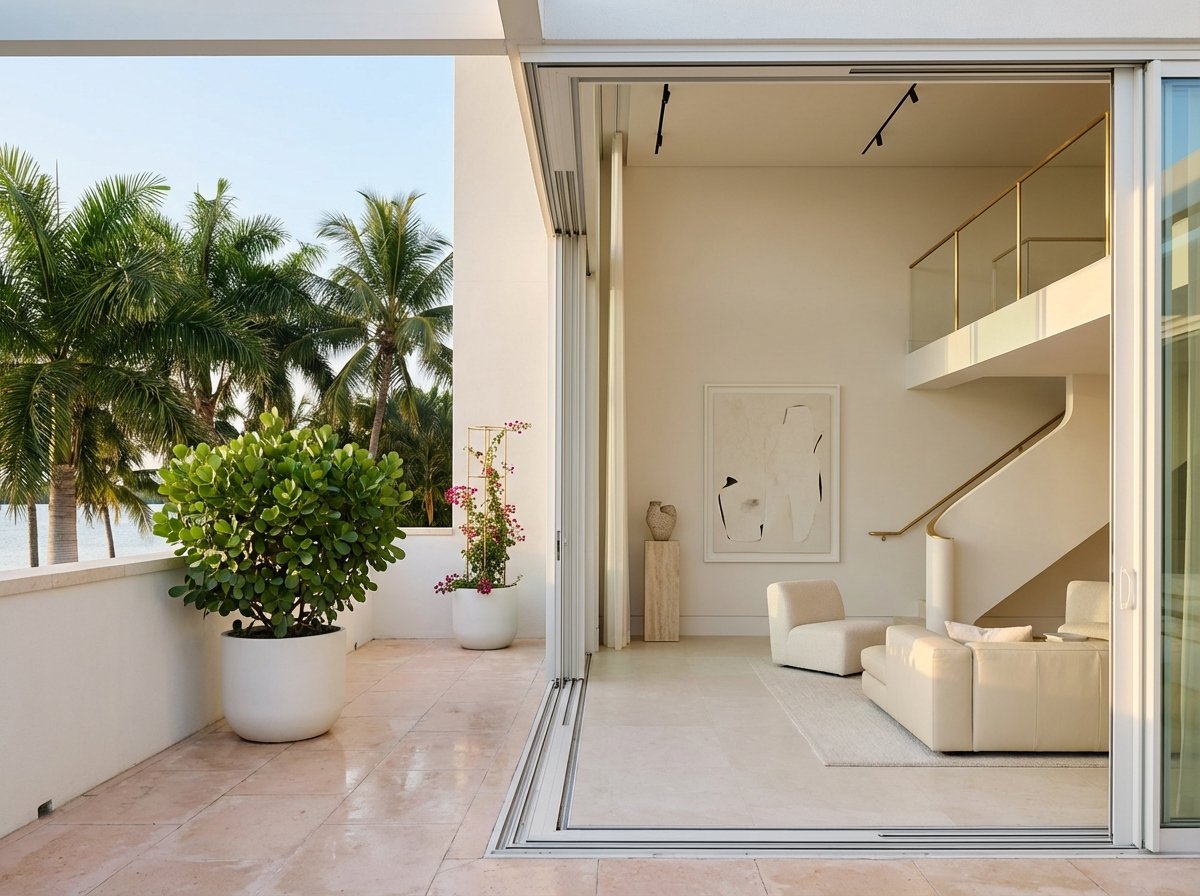
In the Palm Beaches, a loft maximizes open volume and long wall runs ideal for large-scale art, while a penthouse adds top-floor views and private outdoor space, often at a 10 to 20 percent price premium over a comparable lower-floor unit. West Palm Beach also requires a six-month-and-one-day minimum stay for most residential rentals, a key factor for seasonal buyers.
Still weighing loft versus penthouse, or ready to walk through both at The Haven?
Are you torn between sky-high views and gallery-scale volume? In the Palm Beaches, the choice between a loft and a penthouse shapes how you live, host, and protect what you love. Whether you collect art, entertain often, or plan seasonal use, each option carries real tradeoffs. This guide breaks down the differences, the costs and rules that matter locally, and a simple checklist to help you decide.
Feature | Loft | Penthouse | Traditional Condo |
|---|---|---|---|
Ceiling height / volume | High, open volume, long wall runs | Elevated, sometimes vaulted | Standard |
Outdoor space | Limited, often none | Private terrace, often the building's largest | Shared or small balcony |
Elevator access | Shared, standard | Sometimes private or semi-private | Shared, standard |
Typical price premium | Comparable to standard units per square foot | Roughly 10 to 20% or more over a comparable lower-floor unit in many markets, though no Palm Beach-specific figure is publicly available | Baseline |
Best fit for | Art collectors, large-scale entertaining, gallery-style living | Buyers prioritizing views, private outdoor space, top-floor prestige | Buyers prioritizing defined rooms and lower relative cost |
Loft vs. penthouse at a glance
What defines a loft
A loft usually prioritizes open space over partitions. You'll see high ceilings, long wall runs, large windows, and flexible layouts that feel like a private gallery. Some are authentic conversions, while others are new builds styled as lofts. The benefit is volume and adaptability, with a tradeoff in privacy and discreet rooms.
What defines a penthouse
A penthouse typically sits on the top floor or top floors and is marketed at a premium for its views, terraces, larger footprints, elevated ceilings, and private or semi-private elevator access. In many buildings, similar lower-floor plans exist without those extras. Market research outside Florida has found penthouse premiums ranging from roughly 10 to 20% over a comparable lower-floor unit, with one New York-focused study finding an 11% per-square-foot premium translating to a much larger gap in total price on the highest-profile units. No Palm Beach-specific premium study is publicly available, so treat any percentage as directional, not a quote for a specific building.
How traditional condos differ
Traditional condos lean into defined rooms, built-in storage, and standardized finishes. Outdoor space is often smaller than a penthouse terrace, and access is shared rather than private. Compared with lofts, you trade some visual volume for separation of spaces and everyday practicality.
If you collect art
Climate stability and storage
Protecting art in a coastal climate takes planning. Conservation guidance has traditionally targeted a stable range around 68 to 72 degrees and 45 to 55 percent relative humidity, with limited short-term swings, though many conservators now accept somewhat broader ranges for stable collections. Interior units with robust HVAC and insulation make that easier than spaces with frequent outdoor exposure. Ask for written HVAC specs, dehumidification capability, and whether the unit includes sealed storage suitable for delicate works. For background on environmental standards and care, see the National Park Service's Museum Handbook, Chapter 4: Museum Collections Environment.
Walls, ceilings, and installation
Lofts excel at long, uninterrupted walls and tall ceilings that welcome large-scale pieces and sculpture. Penthouses can offer dramatic height and natural light, but rooflines and terrace glazing can interrupt long wall runs. Before you buy, review HOA alteration rules and engineer notes that govern penetrations into structural elements. Confirm load capacity for heavy works and whether the association requires approved installers.
Logistics for large pieces
Moving oversized art is a project in itself. Ask about a freight or service elevator, dedicated loading zones, and whether the building requires elevator pads, reservations, or move deposits. If a penthouse relies only on passenger elevators, factor in added time, specialized rigging, or scheduling constraints. Confirm these procedures in writing to avoid surprises on delivery day.
If you love to entertain
Outdoor space and flow
Penthouses often deliver private terraces that feel like open-air living rooms with sweeping Intracoastal or ocean views. That space is ideal for al fresco dinners and larger guest lists, but it can bring wind, sun, and extra maintenance. Roof-level features like pergolas, outdoor kitchens, or shade elements typically require engineered design that meets the Florida Building Code. Ask for permits, waterproofing warranties, and structural reports before you rely on the terrace for regular entertaining. See the state's Florida Building Code and Standards FAQ for background.
Service access and staffing
The best entertaining layouts keep service circulation discreet. Private elevator landings, a secondary service entrance, or a staffed lobby can make hosting effortless. Inquire about guest parking policies, concierge or valet offerings, and any HOA rules on noise, event hours, or maximum group sizes. If you plan frequent gatherings, ask for any event-related fees and reservation procedures upfront.
If you plan seasonal use or rentals
City and county rules
Short-term rental rules vary across the Palm Beaches and can significantly limit your strategy. West Palm Beach prohibits rentals of less than six months and one day in most residential zoning districts, a rule strict enough to rule out nightly or weekly Airbnb-style rentals entirely in those zones; a small number of transient-lodging and planned-development zones are exceptions. Review the city's own guidance before assuming any rental income: West Palm Beach rental property guidelines. The Town of Palm Beach goes further and strictly prohibits short-term rentals, including Airbnb, under its own code; see the Town of Palm Beach's own FAQ on the rule. At the county level, any rental of six months or less is treated as transient and subject to the Tourist Development Tax, with an exemption only for a bona fide written agreement for continuous residence longer than six months. Registration and monthly filing details are here: Palm Beach County TDT for short-term rentals.
HOA overlay
Condo and HOA documents often add their own limits on minimum lease length, caps on rentable units, and owner-occupancy requirements, and these can be stricter than city or county rules. Always request the governing documents, budget, and recent meeting minutes. Florida's Condominium Act outlines owner rights, reserves, and assessment transparency that directly affect your plans: Florida Statute Chapter 718.
Costs, risks, and resilience
HOA reserves and assessments
Full-service towers with valet, concierge, and extensive amenities typically carry higher monthly fees. Reserve health matters just as much as fee level, since underfunded reserves can lead to special assessments. Ask for the latest reserve study, budget, and 12 months of meeting minutes, and use Chapter 718 as your reference point for what associations are required to disclose.
Flood, wind, and coastal exposure
Top-floor living reduces flood exposure but still faces wind, salt, and roof-level risks. Check the FEMA Flood Map Service Center for the property's flood zone and ask for the building's Elevation Certificate if available. For long-term coastal exposure scenarios, NOAA's Sea Level Rise Viewer lets you model different rise scenarios by address; it's a screening-level tool, not a prediction of an exact flood location. Work with a local insurance broker to price homeowners, wind, and flood coverage based on the exact building, year built, and mitigation features.
Operating costs and terrace maintenance
Expect a premium for rooftop terraces and mechanical redundancies that support larger spaces. Some associations apply extra charges for expansive outdoor areas because of waterproofing, decking, and equipment access. Lofts in smaller or converted buildings may carry lower fees, but services are usually more limited. Compare the building budget and any special assessment history to see your real monthly footprint.
Decision tool: choose your best fit
Score your priorities
Give each item a score from 1 to 5 to clarify your direction.
- Art collection needs: stable climate control, secure storage, wall or ceiling capacity, discreet vendor access.
- Entertaining needs: private outdoor space, good service circulation, guest parking, on-site staffing.
- Seasonal or rental use: allowed rental interval, HOA rental caps, local zoning, tax obligations.
Due-diligence checklist
- Confirm municipal rental zoning and the six-month-and-one-day minimum with the city's published rules.
- Check coastal risk by address: review FEMA flood maps, ask for the Elevation Certificate, and model scenarios with NOAA's Sea Level Rise Viewer.
- Request HOA governing documents, the latest budget, reserve study, and 12 months of minutes, referencing Florida Statute Chapter 718.
- Ask for building mechanical and HVAC specifications, including age and service history, and whether the unit has independent humidity control.
- Confirm elevator types and move-in rules: service elevators, reservation windows, required protection, and deposits.
- Get preliminary insurance quotes for wind, flood, and contents using the full address and building data.
- Verify HOA event and noise rules, guest parking policies, and any event-day surcharges if you plan to host regularly.
When a penthouse premium makes sense
A penthouse is compelling when you value direct outdoor living, long views, and private vertical access. The premium many buyers accept is about more than height, it's about unique terraces, ceiling volume, and upgraded finishes that create a singular living experience. If similar lower-floor plans exist without those advantages, the label alone may not justify the price.
When a loft is the smart move
Choose a loft when large-scale art, flexible layouts, and a gallery-like ambiance are central to your lifestyle. You gain dramatic walls and open volume that traditional condos cannot match. Many buyers also appreciate simpler operating costs in buildings with fewer hotel-style services. If you host intimate salons or private viewings, a well-sited loft can feel like a curated extension of your collection.
How we can help
If you want a residence that lives like a curated object, you are in the right place. We focus on architecturally distinctive waterfront lofts and duplex penthouses, presented with gallery-level care and discretion. When you are ready to walk through spaces that match your priorities, request a private viewing and we will tailor the tour to your goals. Explore what is possible with Haven Palm Beach.
Frequently Asked Questions
What is the core difference between a loft and a penthouse?
A loft emphasizes open volume, flexible layouts, and long wall runs, ideal for large art or a gallery-style layout. A penthouse adds top-floor views, private outdoor space, and premium access or finishes, typically at a price premium over a comparable lower-floor unit.
Can I short-term rent my West Palm Beach condo?
In most residential zones, no. West Palm Beach requires a minimum rental period of six months and one day, which rules out nightly or weekly rentals outright. A small number of transient-lodging and planned-development zones are exceptions, and any rental of six months or less is also subject to Palm Beach County's Tourist Development Tax.
What HOA documents should I review before buying a penthouse?
Request the governing documents, current budget, latest reserve study, and the past 12 months of board meeting minutes. Florida's Condominium Act, Chapter 718, sets the disclosure and reserve rules your association has to follow, and a weak reserve study is often the first sign of a coming special assessment.